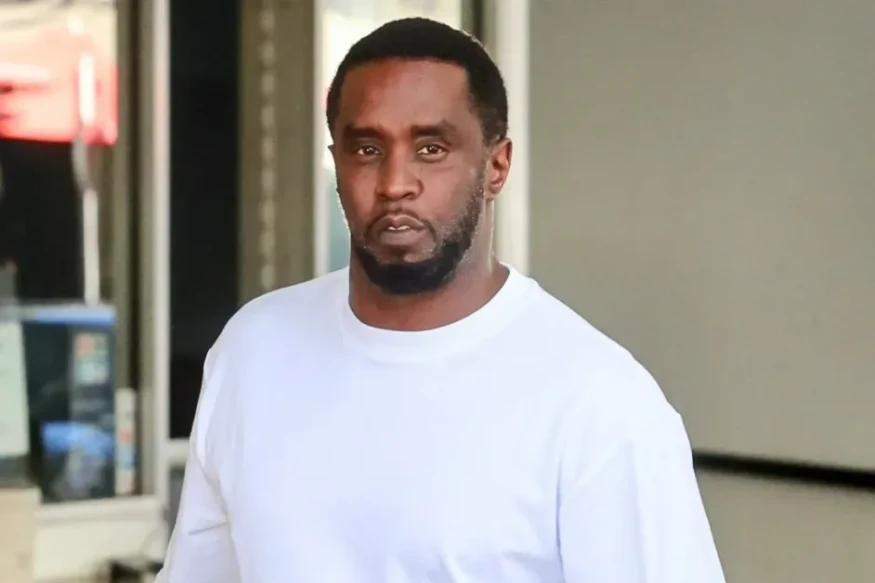
Donald Trump has publicly refused to grant a presidential pardon to Sean “Diddy” Combs, despite receiving a handwritten personal letter from the rapper. The decision has reignited debate over the intersection of politics and celebrity power in America, revealing that the long-standing tension between Trump and Diddy remains as sharp — and as personal — as ever
The news that former U.S. President Donald Trump declined Diddy’s request for clemency has sent shockwaves through both political and entertainment circles. In a recent interview with The New York Times, Trump confirmed that the embattled hip-hop mogul had written him a personal, handwritten letter asking for intervention. But, as Trump bluntly stated, “there’s no reason to get involved.”
Diddy, currently serving a 50-month federal sentence at FCI Fort Dix in New Jersey for prostitution-related charges, reportedly sent the letter directly to Trump without involving his legal team — a move many insiders have described as “a last desperate appeal.” The rapper, once celebrated as a symbol of ambition and success in hip-hop, was convicted in October 2024 and has since filed an appeal hoping to have his sentence reduced or overturned.
While Diddy was cleared of the more serious charges of sex trafficking and extortion, the remaining convictions were enough to derail his career and tarnish his public image. Since his imprisonment, his once-flourishing media empire has stalled, and his business ventures — from fashion to spirits — have been left in limbo. For fans and critics alike, the letter to Trump seemed like a final attempt to reclaim control over a collapsing legacy.
Trump, however, appeared unmoved. Speaking to Newsmax, he confirmed having known Diddy personally years before, when both men were dominant forces in their respective worlds — Trump in business and Diddy in entertainment. “We used to get along great,” he said. “But then he turned hostile when I ran for president in 2016. It’s hard to forget that kind of thing.”
That statement alone fueled speculation that Trump’s refusal might be driven as much by personal resentment as by politics. Analysts pointed out that Trump’s tone was uncharacteristically candid, hinting at an emotional subtext that blurred the line between political decision-making and personal vendetta.
The revelation of Diddy’s letter has also reignited public discussion about how presidential pardons are often entangled with personal or political motivations. In recent history, celebrities and public figures — from Lil Wayne to Joe Exotic — have sought clemency through political connections, hoping to leverage fame for leniency. But Trump, at least this time, appears unwilling to entertain such appeals.
According to sources close to the former president, the letter was “short but emotional,” written entirely by hand, expressing regret for past actions and appealing to Trump’s “humanity.” Yet, the gesture failed to move him. “I read it,” Trump said during the interview. “But I’m not going to act on it. It’s not the right time.”
Reactions across social media have been polarized. Some fans of Diddy saw the letter as an act of humility — a rare acknowledgment of vulnerability from a man once known for his untouchable persona. Others dismissed it as a calculated PR move aimed at generating sympathy. The hashtag #DiddyLetter trended globally within hours, with users debating whether Trump’s denial was a principled stance or an act of revenge disguised as moral integrity.
Meanwhile, legal experts have noted that Trump’s rejection, though unsurprising, could significantly affect Diddy’s appeal prospects. “Clemency is often seen as a final lifeline,” said political commentator Rashida Ellis. “If Trump wanted to send a message that celebrity influence no longer sways political power, this was the way to do it.”
For Diddy, the refusal marks another chapter in an increasingly tragic downfall. Once the embodiment of the American dream — from record executive to global icon — he now faces the harsh reality of incarceration and a rapidly eroding public reputation. His lawyers, who had hoped for some form of presidential leniency, are now shifting their focus entirely to the judicial appeal, but privately admit that “public perception may never recover.”
Trump, on the other hand, seems determined to project authority and composure ahead of the 2026 election cycle. In a statement following the interview, he remarked, “We’re all human, but leadership means making hard choices — not emotional ones.” The comment was seen by many as both a self-justification and a strategic distancing from any hint of favoritism toward controversial figures.
The two men’s intertwined history adds another layer of irony. In the early 2000s, Trump and Diddy were frequently seen at the same high-profile events, exchanging compliments in interviews. Diddy even praised Trump in past interviews as “the ultimate hustler” and “someone who understands power.” But by 2016, the relationship had soured. Diddy became one of Trump’s most vocal critics, using his platform to rally against racial injustice and criticize what he called “the exploitation of Black artists and communities.”
Now, years later, those words seem to have come back to haunt him. As Trump continues to rebuild his political brand, aligning himself with traditional conservative values and strong-man leadership, granting clemency to a figure like Diddy — whose legal troubles are steeped in controversy — would risk alienating his voter base.
Entertainment analysts have pointed out that this saga reflects a broader cultural shift. The once-blurred lines between celebrity and politics are hardening again. Where fame once opened doors, it now attracts scrutiny. “The Trump–Diddy dynamic is more than a feud,” writes Variety. “It’s a symbol of America’s uneasy relationship with power, redemption, and reputation.”
As the story unfolds, both men find themselves at crossroads. For Diddy, the future hinges on whether his legal team can overturn his conviction — or if his reputation can ever recover from the collapse of his empire. For Trump, the incident reinforces his image as a leader unwilling to bend under pressure, even from Hollywood’s elite.
In the end, the handwritten letter that was meant to bridge a divide only underscored how deep that divide remains. Diddy reached out as a man seeking mercy; Trump responded as a politician guarding power. Between them lies a cultural chasm — one that says as much about modern America as it does about the two men who now symbolize its contradictions.