Twenty years after its release, Rihanna’s “SOS” remains a fascinating example of how 1980s music influenced the pop sound of the mid-2000s. Beyond its instantly recognizable sample of Soft Cell’s “Tainted Love,” songwriter Evan “Kidd” Bogart incorporated references to six famous songs from the decade into its second verse, creating a cleverly connected story about romantic obsession and losing control.
When Rihanna released “SOS” in 2006, its electronic rhythm immediately brought an older pop classic to mind. The connection to Soft Cell’s “Tainted Love” was easy to recognize, but another musical reference remained hidden in plain sight. The song’s second verse contains a series of carefully adapted titles from some of the best-known recordings of the 1980s.
Songwriter Evan “Kidd” Bogart explained the story behind those lyrics during an October 2024 interview with Daniel Wall on the “Behind the Wall” podcast. His idea was to take familiar song titles from the decade and weave them into a verse that would make sense independently of their original context.
The first reference comes from “Take On Me,” the breakthrough international hit by Norwegian band a-ha. Released during the height of the synth-pop era, the song reached No. 1 on the Billboard Hot 100 in 1985 and became equally recognizable for its distinctive animated music video.
Bogart then drew from Cutting Crew’s “(I Just) Died in Your Arms.” Released in 1986, the song topped the American singles chart the following year. Its central image of overwhelming romantic attraction fits naturally into the emotional confusion described in “SOS.”
The third reference is “I Melt with You” by Modern English, originally featured on the British band’s 1982 album “After the Snow.” Although it never reached No. 1 on the Billboard Hot 100, the recording became an enduring new wave favorite, giving the songwriter another recognizable expression of romantic intensity.
Next comes “Head Over Heels” by Tears for Fears, released in 1985 as part of “Songs from the Big Chair.” The expression already belongs to everyday romantic language, allowing Bogart to incorporate the reference without interrupting the flow of Rihanna’s lyrics.
“You Keep Me Hangin’ On” provides another connection to the decade through Kim Wilde’s 1986 recording, which reached No. 1 in the United States in 1987. The song itself has a much longer history, having originally been recorded by the Supremes in 1966.
The final reference comes from Michael Jackson’s “The Way You Make Me Feel,” taken from his 1987 album “Bad.” The single reached the top of the Billboard Hot 100 in January 1988, completing the collection of musical references that Bogart brought into the verse.
What makes the songwriting particularly effective is that listeners do not need to recognize any of these titles to understand the story. The words describe someone overwhelmed by attraction, struggling with uncertainty and finding it increasingly difficult to maintain emotional control.
The lyrical references are only one part of the song’s relationship with the 1980s. Producer J.R. Rotem built its musical foundation around elements of Soft Cell’s 1981 recording of “Tainted Love,” transforming the familiar electronic motif into a dance-pop production suited to Rihanna’s emerging sound.
“Tainted Love” itself had already undergone a significant musical transformation. Written by Ed Cobb, the song was recorded by American soul singer Gloria Jones in 1964 and released the following year. Soft Cell subsequently reworked it with synthesizers and electronic percussion, bringing the composition into the British synth-pop movement.
More than two decades later, Rotem adapted that distinctive sound for a new generation of pop listeners. The recording credits for “SOS” include Bogart, Jonathan Rotem and Ed Cobb, whose original composition forms part of the song’s musical foundation.
The six additional references function differently. Rihanna’s recording does not contain musical samples from all six songs. Their presence comes through Bogart’s writing, with recognizable titles adapted to fit the narrative of an entirely separate composition.
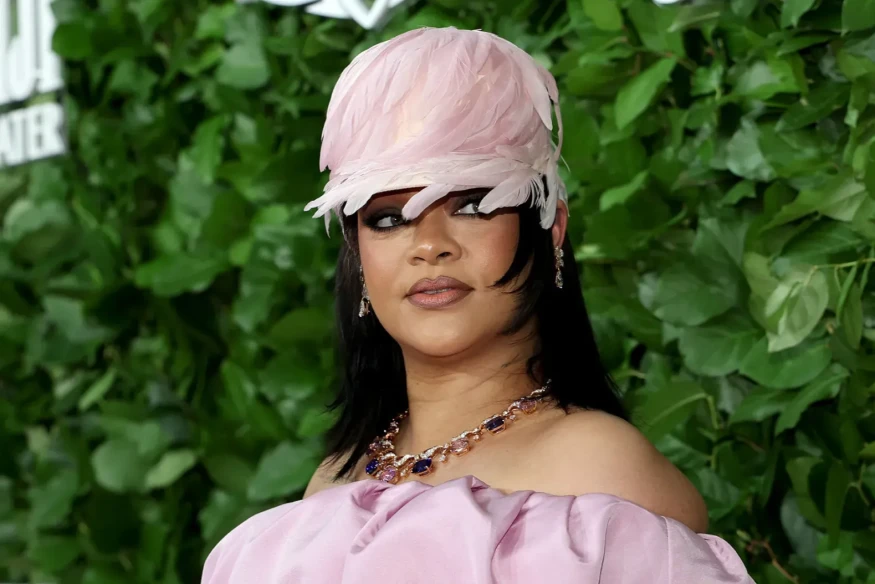
“SOS” arrived as the lead single from Rihanna’s second studio album, “A Girl Like Me.” Her international breakthrough with “Pon de Replay” in 2005 had introduced audiences to her Caribbean-influenced sound, while the new single placed greater emphasis on electronic dance-pop.
On May 13, 2006, “SOS” reached No. 1 on the Billboard Hot 100, where it remained for three consecutive weeks. It became Rihanna’s first American chart-topper and preceded a succession of singles that would establish her among the most commercially successful recording artists of her generation.
When the clip from Bogart’s interview gained attention on TikTok in October 2024, listeners began revisiting the recording and identifying the individual references. Nearly two decades after the song first appeared, a detail that had always been present in its lyrics became the subject of renewed discussion.
The musical history behind “SOS” stretches considerably further back than its 2006 release date. A soul recording from the 1960s supplied the original composition, Soft Cell gave it an electronic identity in 1981, and six other songs from the following decade helped shape its lyrics. All those influences came together in the single that gave Rihanna her first American No. 1.