What started as a forgotten Christmas ballad turned into one of the most timeless love songs in pop history. “It Must Have Been Love” not only defined Roxette’s career but also became a soundtrack to an era — from heartbreak and reinvention to global success. Here’s the real story behind the song that made Sweden fall in love with Roxette all over again
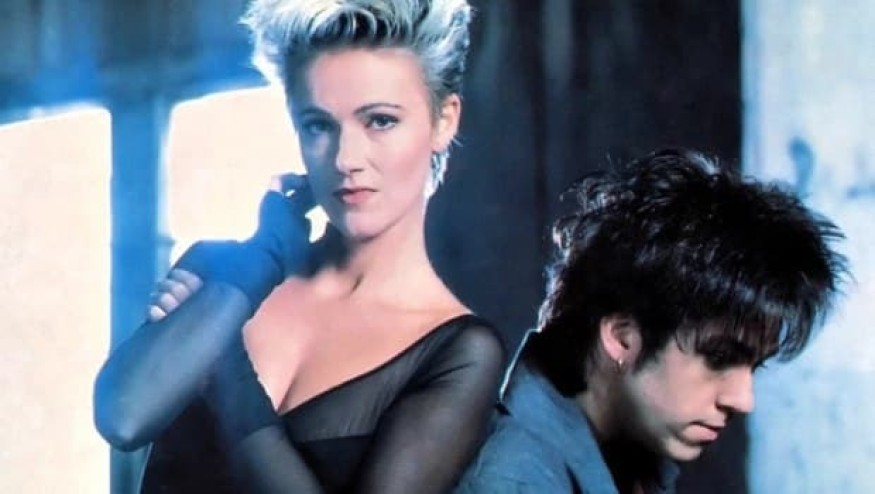
At just twenty, Per Gessle was living the dream. As part of Sweden’s top pop band, Gyllene Tider, he had tasted fame early. But when the spotlight faded, he was left in silence — two years of creative drought and quiet depression. Out of that stillness, however, came a spark: the idea for a new beginning, a duo that would later be known to the world as Roxette.
In the beginning, Roxette was more of a side project. Marie Fredriksson, already an acclaimed solo artist, joined Gessle whenever her own schedule allowed. Per knew he had to create something special to keep her interested — something that would prove this duo could go beyond Sweden’s borders. Back then, Swedish pop had one global name — ABBA — and Gessle’s hopes were modest: maybe a hit in Germany, or a song on Scandinavian radio.
But breaking through was harder than expected. Their German label wasn’t convinced that Swedish pop could sell. Roxette’s songs were too different, too melodic, too emotional. Then came an unusual request: the label wanted a Christmas song.
It wasn’t what Gessle had in mind, but he took the challenge. Sitting at his piano in his hometown of Halmstad, he began to write. The lyrics flowed naturally — “It must have been love, but it’s over now.” At first, it was a pure love song. Then, under pressure from the label, he added a holiday twist, turning it into “It Must Have Been Love (Christmas for the Broken-Hearted).”
Marie recorded the vocals in one take — raw, emotional, and heartbreakingly beautiful. The song was released in Sweden in 1987, reaching the local Top 5, but EMI Germany rejected it. For them, it was “too melancholic” for radio. And so, the song was shelved.
Years passed. Roxette started to find success with songs like “The Look” and “Listen to Your Heart.” Then, one day, the phone rang. It was Los Angeles calling. The producers of a romantic comedy called Pretty Woman were searching for the perfect love song for a key scene. The label asked Gessle if Roxette had anything that might fit. At first, he said no — he was preparing to travel to New Zealand. But then he remembered that “old Christmas track.”
Roxette went back into the studio. They removed the holiday reference — changing “Christmas day” to “a winter’s day” — and reworked the intro, adding the now-iconic guitar melody. When the producers heard it, they knew immediately. Director Garry Marshall later told Gessle that during the scene where the song plays, there would be no dialogue — just music. “It carries the entire emotion of the moment,” he said.
When Pretty Woman premiered in 1990, “It Must Have Been Love” became an instant global hit. The song shot to No.1 on the Billboard Hot 100 and dominated charts across the world. Roxette had arrived.
For Per and Marie, it was a life-changing moment. “We never imagined that song would do this,” Gessle later said. “It was written in my living room, in a moment of sadness — and suddenly, it was everywhere.”
The success that followed was massive. In Buenos Aires, thousands of fans gathered outside their hotel, singing their songs all night long. Fans sent letters, slept outside their homes, even took small items as souvenirs. Roxette had become a global phenomenon — a symbol of emotional pop at its purest.
Yet, for Gessle, the song’s true power wasn’t in its production or global success. It was in Marie Fredriksson’s voice. “The magic of that song,” he said, “is Marie. She sang it straight from her heart.”
Years later, when Marie battled illness and stayed away from the stage, she made a powerful return — performing “It Must Have Been Love” at one of Per’s solo concerts in Amsterdam. The crowd was overwhelmed. “I’ve never seen so many people cry at once,” Gessle recalled. “It was one of those moments where music connects souls.”
That performance reignited Marie’s spirit. She went on to record again, tour again, and reconnect with her fans. Gessle believed that the love she received from the audience — and her deep bond with the music — gave her precious extra time.
Producer Clarence Öfwerman later revealed that much of the song’s sound was the result of early experimentation with technology. Using a Synclavier, one of the first digital synthesizers, they built much of the arrangement electronically. The piano solo was improvised, and Marie’s vocals pushed to emotional and technical extremes — soaring higher than most singers could ever reach.
The Pretty Woman version was nearly identical to the original, except for a deeper mix, richer layering, and that iconic “snare reverb” that producer Öfwerman jokingly called “the lucky snare” — a sound used on ten No.1 hits before it.
Before the movie’s release, Roxette barely remembered the song. They hadn’t performed it live in years. But once Pretty Woman hit theatres, everything changed. The track dominated airwaves, playlists, and love stories across generations.
For a song born out of rejection and repurposed by chance, “It Must Have Been Love” became a pop anthem of heartbreak, healing, and hope.
Per once joked that the band had T-shirts made that said, “Today Sweden, tomorrow the world.” Everyone laughed, saying that kind of success only happened to ABBA. But when Roxette’s ballad took over the world, the joke became reality.
From a small Swedish town to the global stage, from a forgotten Christmas song to a timeless classic — “It Must Have Been Love” was more than just a hit. It was the sound of two artists finding their truth, and the world falling in love with it.