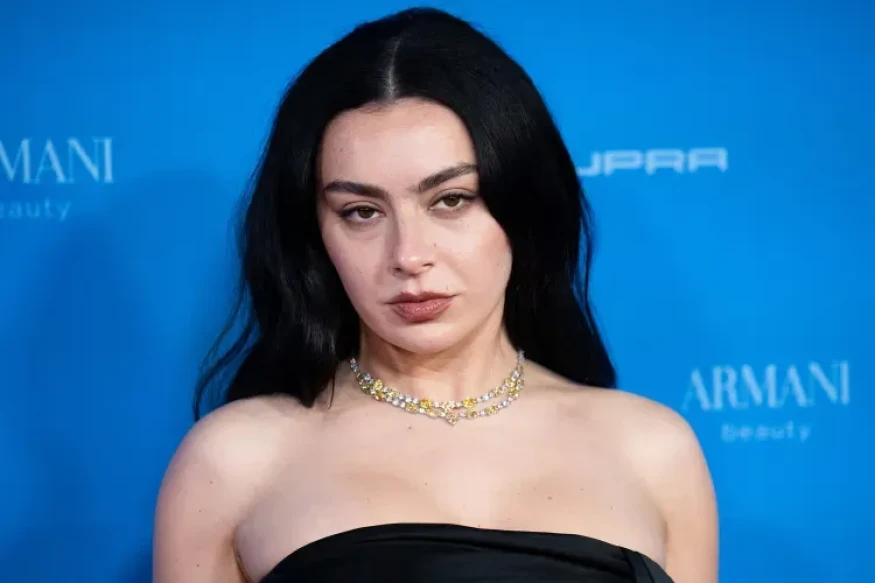
Charli xcx returns with “Music, Fashion, Film,” an 11-track album that pushes pop into a broader creative space shaped by fashion, cinema and visual storytelling. After the cultural explosion of “Brat,” she is not trying to repeat the same formula. Instead, she is building a new world in which songs coexist with images, characters, ideas and conversations about art and artistic legacy.
“Music, Fashion, Film” arrived on Friday, July 24, placing Charli xcx in the difficult position that follows a career-defining breakthrough: deciding what comes next. “Brat” was never simply a successful album. It became an aesthetic, a color, an online language and a cultural reference point that pushed Charli into a level of visibility extending far beyond music.
Rather than stretching that era beyond its natural life, she changes the setting completely. “Music, Fashion, Film” treats sound as one component of a larger visual and cinematic experience, creating a project that feels designed not only to be heard but also to be seen, staged and interpreted.
The album contains 11 tracks, including the previously released “Camera,” “SS26,” “Rock Music” and “Wink Wink.” Each of those songs initially felt like a different entrance into the project, offering fragments of its identity without fully explaining how they would connect. Their titles evoke cameras, movement, fashion seasons and the raw physical energy of performance.
That is important because the album’s title does not appear to be decorative. Music, fashion and film operate as three connected surfaces of the same creative universe. Charli moves between them without treating any one medium as subordinate to the others.
The transition had already begun before the album’s release. Earlier this year, Charli worked on music for “Wuthering Heights,” moving closer to the logic of cinematic storytelling. Writing for film requires a different relationship with sound. A song no longer has to exist only as an independent pop statement; it must also interact with characters, spaces, silences and emotional cues already present on screen.
That experience appears to have shaped “Music, Fashion, Film.” The album often feels less like a conventional sequence of pop songs and more like music placed inside a deliberately constructed visual world.
Its title functions almost like an artistic manifesto. Fashion has always been central to Charli’s identity, but here it is not reduced to styling for a campaign or a red-carpet moment. Film, similarly, is not treated as a glossy extension of a music video.
Both become tools for expanding what the songs can mean. After the instantly recognizable green universe of “Brat,” this new era feels more layered, less immediate and more interested in suggesting that every track belongs to a larger scene.
The album’s most unusual collaboration appears on its final track, “No One Lasts Forever,” where the featured voice is not another singer but filmmaker David Cronenberg. That choice immediately shifts the project away from the standard logic of the star-studded pop collaboration.
Instead of adding a second vocalist for commercial impact, Charli brings in a director whose career has revolved around transformation, the body, identity, fear and the unstable relationship between people and images. His presence gives the album’s ending a reflective, almost philosophical quality.
Charli visited Cronenberg in Toronto and spoke with him for roughly an hour. Portions of that conversation were later selected for inclusion in “No One Lasts Forever.” She has described him as intelligent, kind and deeply interesting, particularly in the way he thinks about art, artists and what remains after they are gone.
By placing a real conversation inside the final track, Charli turns the album’s closing moments into something between a film epilogue, a personal confession and an open question about artistic permanence.
The phrase “No One Lasts Forever” carries particular weight after “Brat.” Charli found herself at the center of an enormous cultural moment, but she also appears acutely aware that no era can remain dominant forever.
Rather than ignoring that reality, she folds it into the next phase of her work. The line is not only about mortality. It is also about trends, images and cultural cycles. What survives is not continuous visibility, but the work itself and the way it continues to communicate once the moment around it has passed.
The public first began experiencing the new material through smaller shows in New York and London earlier in July. Those performances gave selected tracks from “Music, Fashion, Film” their first live setting, away from the scale of a major arena tour.
For an album so invested in image and atmosphere, those intimate performances offered an important first look at how the songs behave physically in a room. The distance between artist and audience was smaller, making the transition from recorded concept to live identity more immediate.
The next step will be much larger. Charli xcx is set to take the project across North America beginning September 11 in Philadelphia, with additional stops including Brooklyn, Toronto, Los Angeles and Las Vegas.
The shift from July’s smaller rooms to major indoor venues will reveal how the album’s cinematic character translates into full-scale production. Charli has never treated concerts as simple reproductions of studio recordings. Her live shows function as spaces where sound, movement, styling and visual design combine into something new.
The weight surrounding “Music, Fashion, Film” inevitably comes from “Brat.” Released in June 2024, that album reached No. 3 on the Billboard 200, the highest position of Charli’s career, and later won three Grammy Awards.
More importantly, it changed how she was positioned within pop culture. For years, Charli had often been described as an influential artist working slightly outside the center of mainstream pop. “Brat” moved her directly into that center without forcing her to abandon the experimental instincts that had defined her work.
That makes the temptation to describe the new album simply as “the next Brat” understandable, but also misleading. Charli’s career has consistently been built around movement rather than preservation. Each phase has brought a different production language, visual system and relationship with pop itself.
“Music, Fashion, Film” suggests that success has not made her more cautious. If anything, it has given her more freedom to build a project that can include a conversation with David Cronenberg, move between music and cinema, and ask questions about art that extend beyond chart positions.
The album may have arrived as 11 finished tracks, but its identity is still expanding. Over the coming months, its live performances, videos, fashion choices and stage design will continue shaping how the project is understood.
By the time Charli xcx begins the North American tour in September, “Music, Fashion, Film” will no longer exist only as an album. It will have become a larger visual and performance language — exactly the kind of transformation its title promises.