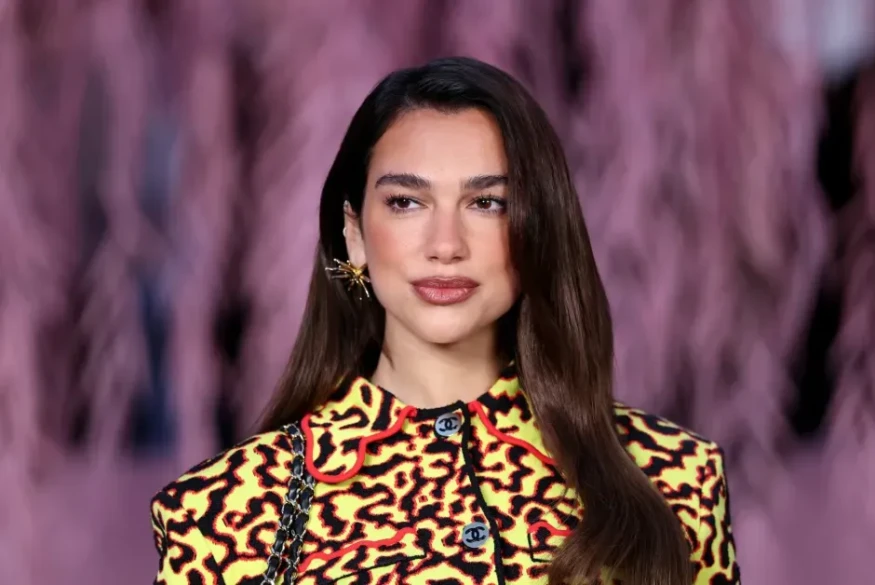
Dua Lipa has publicly voiced her support for protesters in Albania, raising concerns about transparency, environmental protections and the approval process surrounding a major tourism development linked to Ivanka Trump and Jared Kushner. The pop superstar's comments add international attention to a growing political and environmental debate in a country with which she shares deep personal roots.
Dua Lipa has publicly backed demonstrators in Albania who are protesting a luxury tourism project linked to Ivanka Trump and Jared Kushner, expressing concern over the way the development was approved. Speaking during a conversation with Albanian author Lea Ypi on the Service95 Book Club podcast, the global pop star chose not to focus on the high-profile names associated with the investment. Instead, she directed attention to what she considers the core issue: transparency, public consultation and the ability of governments to alter environmental regulations in support of major investment projects. Her intervention has quickly become one of the most widely discussed international reactions to a controversy that has dominated headlines in Albania for weeks.
Rather than delivering a broad political statement, Dua Lipa concentrated on the decision-making process behind the development. She said she was particularly troubled by reports that environmental protections had been weakened through legislative changes introduced without meaningful public consultation. Her comments reflected concerns about governance rather than opposition to economic development itself. As one of the world's biggest pop artists, Dua Lipa is fully aware that every public statement she makes reaches an international audience, giving her remarks influence far beyond the Balkans. In this case, her words have helped bring global attention to a debate that had previously remained largely confined to Albanian politics and regional media.
At the centre of the controversy is a proposed tourism development reportedly valued at around $4.6 billion, first unveiled in 2024 and linked to Ivanka Trump and Jared Kushner. The project envisions a luxury resort along Albania's coastline and has drawn criticism from environmental groups, local residents and opposition voices over both its potential ecological impact and the approval process behind it. Tensions escalated significantly in May, when heavy machinery and fencing appeared on part of the proposed development site. What had previously been a political and legal dispute suddenly became a visible reality, prompting sustained demonstrations in Tirana and increasing scrutiny from both domestic and international observers.
That growing public mobilisation appears to be what resonated most with Dua Lipa. She described herself as deeply moved by the determination of ordinary people who continue to take to the streets because they feel personally affected by the decisions being made. For the singer, Albania is far more than another country featured in international headlines. Her family's Albanian heritage from Kosovo has always been an important part of her public identity, and she has repeatedly spoken about the pride she feels in those roots. As a result, her intervention carries a different weight from that of a celebrity commenting on a distant political issue. It reflects a personal connection to the region and an understanding of why so many people see the debate as extending well beyond a single investment project.
Dua Lipa also made clear that her concerns should not be interpreted as opposition to tourism or economic growth. Instead, she argued that development should be accompanied by transparent institutions, public participation and environmental responsibility. The question, in her view, is not whether investment should happen, but how decisions affecting communities and natural landscapes are made. Albania has experienced rapid growth in international tourism over recent years, attracting increasing foreign investment and global attention. At the same time, that success has intensified discussions about how to balance economic opportunity with the long-term protection of the country's coastline, ecosystems and local communities.
Meanwhile, the demonstrations in Tirana have evolved into something much broader than opposition to a single development project. Many protesters now connect the issue with wider concerns over transparency, corruption and democratic accountability, while some have expanded their demands to include calls for the resignation of Prime Minister Edi Rama. Within that political climate, Dua Lipa's comments do not alter the course of events, but they significantly increase international awareness of the dispute. Her global platform introduces the conversation to audiences who might otherwise never have followed Albanian domestic politics, highlighting the broader questions surrounding environmental governance and public participation.
Environmental activist Besjana Guri described Dua Lipa's intervention as a powerful message directed at the Albanian government, arguing that the singer's international profile could help bring greater visibility to the concerns raised by protesters and environmental organisations. In today's media landscape, where podcast clips and interview excerpts can circulate globally within hours, the voice of a major artist often reaches audiences beyond the scope of traditional political reporting. Many people who might never read a detailed analysis of Albania's environmental legislation may nevertheless discover the issue through Dua Lipa's comments and choose to learn more about the debate.
Throughout her career, Dua Lipa has consistently embraced her Albanian heritage alongside her global pop identity. This latest intervention reflects that same balance. Rather than making herself the centre of the story, she focused on transparency, environmental safeguards and the importance of allowing citizens to participate in decisions that directly affect their communities. As demonstrations continue in Tirana and debate surrounding the tourism project shows little sign of fading, her comments have added another influential international voice to a discussion that now extends far beyond a single investment, raising broader questions about development, democracy and the future of Albania's natural landscape.