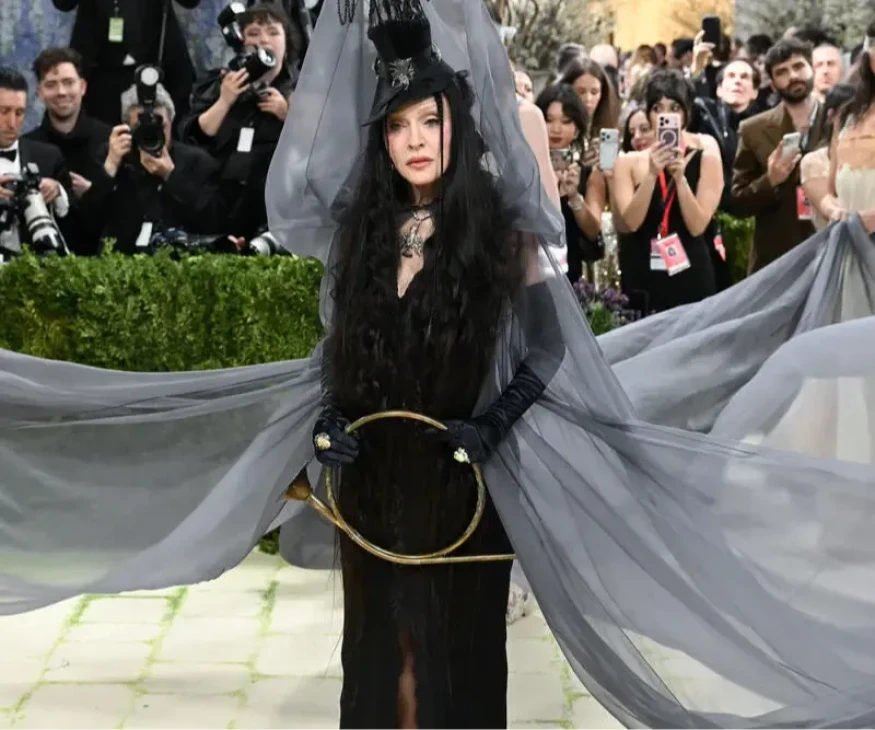
Madonna has finally revealed why her highly anticipated biographical film never became a reality. After years of development, the project ultimately collapsed due to disagreements with Universal over the production budget. The pop icon’s latest comments shed light on the behind-the-scenes struggles of what was expected to become one of the biggest music biopics of the decade.
For more than six years, Madonna’s biographical film remained one of the most discussed projects in the entertainment industry. The idea of bringing the life story of one of pop music’s most influential and transformative figures to the screen seemed inevitable. When it was announced that Madonna herself would write and direct the film, expectations immediately soared. Fans and industry insiders alike anticipated an ambitious cinematic portrait of an artist whose career has spanned more than four decades and reshaped the landscape of modern popular culture.
Behind the excitement, however, the production faced significant challenges. Speaking candidly about the project for the first time, Madonna explained that the primary obstacle was a disagreement with Universal regarding the scale and budget of the film. According to the singer, her life story simply could not be told properly within the financial limitations proposed by the studio. From her early struggles in New York City to her rise as a global superstar, the scope of the narrative demanded a production of considerable size and ambition.
The artist argued that her journey includes far more than a conventional rise-to-fame story. It encompasses decades of reinvention, groundbreaking tours, cultural controversies, artistic evolution and personal transformation. Compressing such a vast and influential career into a smaller-scale production felt impossible to her. While Madonna envisioned a major cinematic event, the studio reportedly viewed the financial realities of the project differently, creating a gap that ultimately proved impossible to bridge.
In an effort to save the film, Madonna explored several alternatives. One proposal involved relocating portions of the production to Serbia, where filming costs could be significantly reduced. According to her account, the suggestion failed to gain traction with the studio. The singer also hinted that she felt her commitment to the project was being questioned, something she found difficult to accept after dedicating years to developing the screenplay and shaping the vision for the film.
The collapse of the project was particularly surprising because substantial progress had already been made. Emmy-winning actress Julia Garner had been selected to portray Madonna after an extensive audition process that reportedly involved months of preparation and competition among numerous candidates. Garner’s casting was widely praised, with many believing she possessed the talent and intensity necessary to capture Madonna’s complex personality and artistic drive.
At one stage, the film appeared to be moving steadily toward production. Scripts were continuously revised, creative teams were assembled and anticipation continued to build. Yet despite the momentum, budget disagreements gradually became the defining issue. What had once looked like a certainty slowly turned into one of Hollywood’s most notable unrealized projects.
The story did not end with Universal’s departure. Madonna revealed that discussions later emerged about transforming the concept into a television series for Netflix. The new format offered obvious advantages, particularly because a multi-episode series could explore far more of her life than a single feature film ever could. However, a new set of complications quickly emerged.
One of the biggest challenges involved the screenplay itself. The rights to material developed during the Universal partnership remained tied to existing agreements, limiting what could be used moving forward. The process of restructuring the project became increasingly complicated. Finding a suitable showrunner, building a new writing team and redefining the narrative structure required far more time and effort than initially anticipated.
Madonna admitted that she spent nearly another year attempting to make the television version work. Eventually, however, she concluded that her energy would be better invested elsewhere. Rather than continue navigating development obstacles, she chose to return her focus to music, the creative space where she has always felt most comfortable and inspired.
That decision coincided with the completion of her upcoming album, “Confessions II,” which is expected to arrive in early July. The project serves as a spiritual successor to the acclaimed “Confessions On A Dance Floor” and represents a return to the musical world that helped establish her as one of the defining artists of her generation. For Madonna, returning to the studio appears to have provided a sense of creative freedom after years spent wrestling with cinematic uncertainty.
Despite the setbacks, her latest comments suggest that the desire to tell her story has not disappeared. Madonna has built her entire career by overcoming obstacles, challenging expectations and repeatedly reinventing herself when others assumed her best years were behind her. That history makes many observers believe the biopic may not be gone forever.
After all, few artists have demonstrated a greater ability to revisit abandoned ideas and transform them into reality on their own terms. Whether the story ultimately arrives as a feature film, a television series or another format entirely, Madonna’s life remains one of the most remarkable and influential narratives in modern music history. For now, the project may be inactive, but her recent comments make it clear that the final chapter has yet to be written.