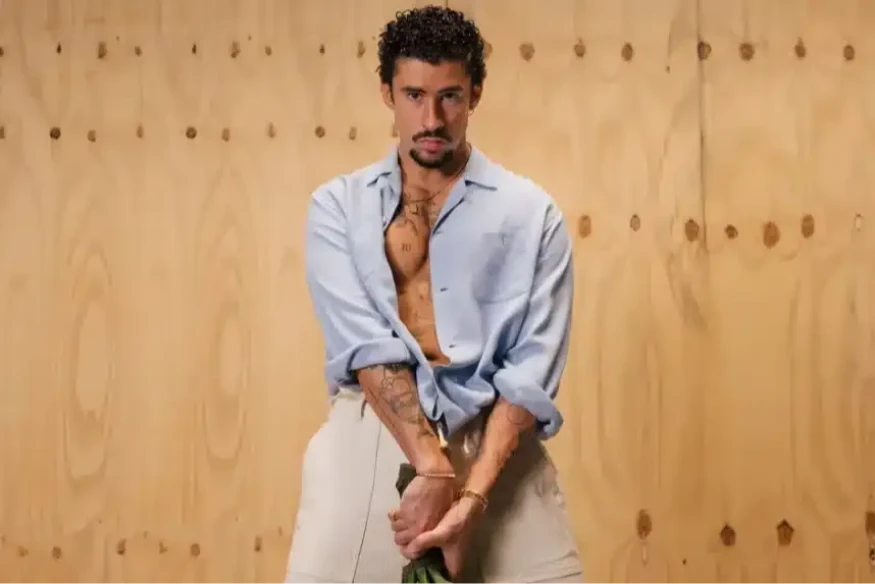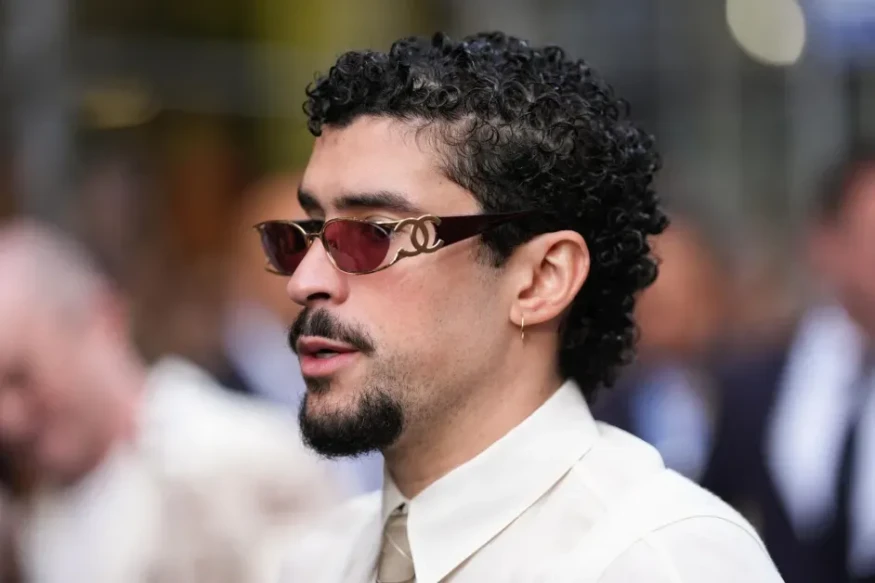
Bad Bunny has been hit with a new $16 million lawsuit in Puerto Rico, after a woman claimed her voice was used without permission in two of his tracks — “Solo de Mi” and “EoO.” The case reignites questions about consent and sampling in Latin music, marking another legal battle for one of reggaeton’s biggest global stars
Bad Bunny — real name Benito Martínez Ocasio — is once again under legal scrutiny as Puerto Rican singer and student Tainaly Serrano Rivera accuses him and his label of illegally using her recorded voice in two songs. Filed on January 5th in the District Court of Puerto Rico, the lawsuit seeks $16 million in damages from Bad Bunny, producer La Paciencia (Roberto Rosado), and Rimas Entertainment, the company that distributes his albums.
According to the court filing, the dispute centers around a voice clip featuring Rivera saying, “Mira, puñeta, no me quiten el perreo” — which roughly translates to, “Listen, don’t ruin my vibe.” Rivera alleges that she recorded the phrase back in 2018 while studying sound production, at the request of La Paciencia, who was collecting vocal samples for potential future projects. However, she claims she was never informed that the clip would later appear in two Bad Bunny songs — nor did she sign any release form or receive any form of payment.
The lawsuit argues that the unauthorized use of her voice violates Puerto Rico’s Right to Publicity Act, which protects individuals from having their likeness, voice, or personal identity exploited for commercial purposes without consent. Rivera’s lawyers — José Marxuach Fagot and Joanna Bocanegra Ocasio — are the same legal team who represented another woman in a 2023 lawsuit against Bad Bunny. That case involved his former girlfriend, Carliz De La Cruz, who accused him of using her voice in “Pa’ Ti” and “Dos Mil 16” without permission.
The new lawsuit comes at a time when Bad Bunny is at the peak of his global career, following the massive success of his latest album Debí Tirar Más Fotos and its sold-out world tour. Both songs mentioned in the suit are major tracks in his discography: “Solo de Mi,” from the 2018 album X 100pre, reached No. 93 on the Billboard Hot 100, while “EoO” hit No. 24 and became a streaming favorite across Latin America.
Rivera’s filing states that her voice was not only used in the studio recordings but also incorporated into live performances during Bad Bunny’s record-breaking 2024 concerts in San Juan. She claims that her voice became part of the artist’s global brand and performance identity, generating profits “in the millions” without her authorization.
So far, representatives for Bad Bunny, La Paciencia, and Rimas Entertainment have declined to comment on the matter. Industry insiders, however, say the lawsuit could have wide-reaching implications for music production practices across the reggaeton and Latin pop genres — where vocal samples, crowd shouts, and improvised phrases are often reused without formal contracts.
Legal experts suggest the case could establish a precedent. “If the court sides with Rivera, it would signal that voice samples must be treated like any other copyrighted material,” said music lawyer Orlando Pérez in an interview with El Nuevo Día. “Artists and producers would need to secure written consent before including any vocal element in a song, even if it’s just a few seconds long.”
This isn’t the first time Bad Bunny has been involved in such controversy. In March 2023, his ex-girlfriend Carliz De La Cruz filed a $40 million lawsuit, alleging he used her iconic “Bad Bunny, baby” voice tag without permission. While that case was eventually settled privately, it raised awareness about intellectual property in vocal performances and triggered debates about ownership in digital-era production.
The similarities between the two cases have reignited public debate about the ethics of sampling and consent in the music industry. Many fans took to social media to express mixed reactions — some defending the artist, arguing that brief voice snippets shouldn’t require complex contracts, while others emphasized that creative collaboration still demands respect for personal rights.
Bad Bunny himself has yet to issue a statement regarding the new allegations. Onstage and online, he has maintained focus on his Debí Tirar Más Fotos tour, which continues to draw massive audiences around the world. However, sources close to his team say the lawsuit has caused “significant concern” within Rimas Entertainment, as another high-profile court case could affect upcoming sponsorships and branding partnerships.
Beyond its immediate legal implications, the lawsuit sheds light on a broader challenge in modern music: how to balance creative freedom with ethical production. In the streaming age, where songs are often built from digital samples, voice memos, and fragments of conversations, determining who owns what has become increasingly complex.
Producers across Puerto Rico and Miami — key hubs of the Latin music scene — have voiced concern that the lawsuit could slow down the creative process. “We all use spontaneous recordings,” said reggaeton producer DJ Nelson. “But now, we’re realizing that one small mistake could cost millions.”
Meanwhile, Rivera’s attorneys argue that this isn’t just about money, but principle. “Our client’s voice was taken, modified, and commercialized without consent,” said Marxuach Fagot. “This is about protecting the right of every artist and individual to control their own identity.”
The case is scheduled for a preliminary hearing in March, with both sides expected to present audio evidence and witness testimony. If the court rules in Rivera’s favor, the decision could reshape how artists and labels handle vocal samples moving forward — potentially requiring explicit agreements even for casual recordings.
For Bad Bunny, whose image has long been tied to creative authenticity and independence, the lawsuit presents a new reputational challenge. Despite his success, his career has been increasingly shadowed by legal disputes that question how his music is made. Whether this becomes another settled controversy or a turning point in Latin music law remains to be seen.
As the story unfolds, one thing is certain: the lines between inspiration, collaboration, and exploitation in the modern music industry are thinner than ever — and even the world’s biggest stars aren’t immune to their consequences.