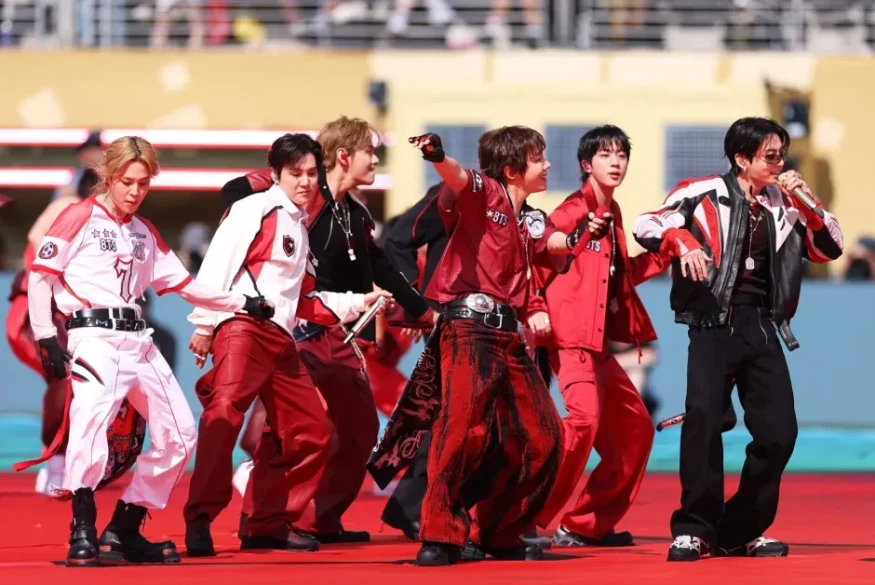
A South Korean court has convicted a Brazilian woman for repeatedly stalking BTS member Jungkook, concluding a case that has reignited concerns about artist privacy in the K-pop industry. The incident, which involved dozens of visits to the singer’s residence despite police warnings and legal restrictions, highlights the growing challenge of balancing intense fan devotion with the personal safety and privacy of global music stars.
The case began in late 2025 when a Brazilian fan reportedly started appearing near Jungkook’s residence in Seoul on a regular basis. According to evidence later presented in court, the woman spent extended periods around the property, attempted to leave messages, photographs and personal gifts, and repeatedly sought opportunities to make contact with the BTS star. What initially appeared to be the actions of an enthusiastic admirer quickly attracted the attention of authorities due to the frequency and persistence of the visits. Investigators determined that her presence near the property was not isolated but part of a sustained pattern of behavior that continued over several weeks. As concerns grew among both law enforcement officials and people close to the singer, the situation gradually evolved into a formal stalking investigation.
The incident that ultimately drew the most public attention occurred only days after her first appearance at the property. Court documents revealed that the woman returned to the residence and rang Jungkook’s doorbell a staggering 133 times. Judges later cited the act as one of the clearest examples of obsessive behavior presented during the trial. While celebrity fans often seek ways to express admiration, the court concluded that repeatedly attempting to force contact at a private residence crossed a clear legal and personal boundary. The episode became one of the most widely discussed aspects of the case because it illustrated the intensity of the pursuit and helped prosecutors establish a pattern of conduct that went far beyond ordinary fan activity.
Further investigations uncovered additional incidents that strengthened the prosecution’s case. Authorities stated that the woman first appeared near the property on December 7, allegedly walking around the area, throwing objects over the exterior wall and attempting to insert letters through openings near the entrance. During proceedings, she reportedly argued that her actions were motivated by affection and admiration for the artist. However, prosecutors maintained that intent was less important than the repeated violation of personal boundaries. The court ultimately agreed, emphasizing that admiration does not justify behavior that causes fear, distress or disruption to another person’s private life. As evidence accumulated, it became increasingly difficult to view the incidents as isolated expressions of fandom.
The situation escalated further when the woman allegedly attempted to gain access to the residential complex by following a food delivery worker through an entrance gate. Police reported that she used the opportunity to enter a restricted area surrounding Jungkook’s home. That incident resulted in her arrest on December 13. Although she was released the following day after receiving a formal warning and instructions not to return, authorities later determined that the warning had little effect. Instead of ending the behavior, investigators found that she continued attempting to revisit the area in the weeks that followed. The repeated disregard for police instructions played a significant role in the eventual decision to pursue criminal charges and seek stronger legal measures against her.
As concerns intensified, law enforcement officials obtained an emergency protection order prohibiting her from approaching within 100 meters of the singer’s residence. Such measures are designed to provide immediate protection in stalking cases and are increasingly used in South Korea as awareness of harassment-related crimes grows. Despite the restriction, authorities concluded that the woman continued attempting to return to the vicinity of the property. By February, prosecutors had determined that the case warranted formal legal action. Court proceedings later revealed that she had visited the area around Jungkook’s home a total of 22 times within a period of less than two months. The number became one of the most striking statistics presented during the trial and reinforced the perception that the conduct represented a sustained campaign rather than isolated incidents.
The case has also renewed attention on a long-standing issue within the K-pop industry: the phenomenon of so-called “sasaeng fans.” For decades, entertainment companies have struggled with individuals whose admiration for artists evolves into invasive and potentially dangerous behavior. Incidents involving unauthorized surveillance, attempts to obtain personal information, following artists during private schedules and even entering restricted areas have repeatedly made headlines. As K-pop has expanded into a global cultural force, these challenges have become increasingly international in nature. Entertainment agencies now invest heavily in security personnel, surveillance systems and legal resources to protect artists whose visibility often makes them vulnerable to unwanted attention. The Jungkook case serves as a reminder that celebrity culture can sometimes create situations where personal boundaries become dangerously blurred.
For Jungkook, the recent conviction is not the first time concerns about personal security have entered public discussion. In June 2025, shortly after completing his military service, another woman was arrested while allegedly attempting to enter his residence in Seoul. That incident generated significant concern among BTS fans, many of whom called for stronger protections as the group’s members gradually returned to public life following their military obligations. The recurrence of similar situations within such a short period has amplified discussions about how global fame affects artists’ ability to maintain privacy. As BTS continues to occupy a unique position in international music culture, security concerns surrounding its members remain an ongoing issue for both management and authorities.
The Seoul court ultimately sentenced the woman to one year in prison, suspended for two years. In delivering the verdict, the judge noted that the likelihood of future offenses appeared relatively low, a factor that contributed to the suspended sentence rather than immediate incarceration. Authorities are also reportedly considering deportation proceedings unless a successful appeal alters the outcome of the case. Beyond the legal consequences, the incident has become another significant chapter in the broader conversation about celebrity privacy in the digital age. As artists become more accessible through social media and global fandoms continue to grow, the challenge of distinguishing admiration from intrusion remains one of the most complex issues facing the modern entertainment industry.