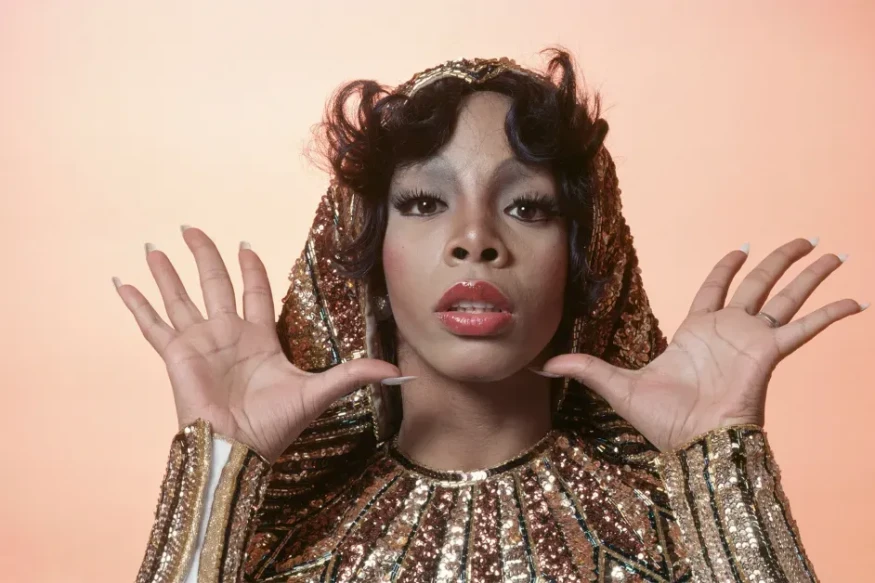
Donna Summer, the legendary Queen of Disco, has been posthumously inducted into the Songwriters Hall of Fame — a long-awaited recognition of her genius as both a performer and a songwriter. Her timeless hits like “I Feel Love”, “Love to Love You Baby”, and “She Works Hard for the Money” continue to inspire artists and audiences worldwide, proving that her music still lives and breathes decades after its creation
Donna Summer’s name has always been synonymous with rhythm, glamour, and reinvention. Known as the Queen of Disco, she ruled the dance floors of the 1970s and shaped the sound of modern pop in ways few artists ever could. Now, more than a decade after her passing in 2012, she has been officially inducted into the Songwriters Hall of Fame — a recognition that celebrates not only her powerful voice but her extraordinary songwriting talent.
The ceremony took place at The Butterfly Room in West Hollywood, turning into an emotional night of memories, love, and deep admiration. Summer’s husband, Bruce Sudano, and their daughters, Brooklyn and Amanda, accepted the honour on her behalf. For them, it wasn’t just a celebration — it was justice served. Sudano shared how much this particular recognition would have meant to his late wife. Despite her fame as a singer, Summer often felt her gift for writing and composing was overlooked. To her, the lyrics and melodies she crafted were the truest reflection of her soul.
Paul Williams, who hosted the ceremony, described Donna Summer as an artist far ahead of her time — someone whose creativity reshaped what pop and dance could be. He highlighted how her songs still resonate, inspire, and move people decades later, not only for their infectious beats but for their emotional honesty.
Across her career, Donna Summer co-wrote or wrote nine of her fourteen Billboard Hot 100 Top 10 hits — a rare achievement for any artist, especially for a woman in that era. Her catalogue includes classics such as “Love to Love You Baby”, “I Feel Love”, “Bad Girls”, and “She Works Hard for the Money”. The latter became a feminist anthem, empowering women everywhere through its story and rhythm. “Dim All the Lights”, entirely written by Summer herself, remains a standout example of her raw musical genius and creative independence.
Her collaboration with Giorgio Moroder and Pete Bellotte on “Love to Love You Baby” changed music forever. With its hypnotic rhythm and futuristic sound, the song broke boundaries, blending soul, funk, and early electronic music in a way that had never been done before. It didn’t just dominate the charts — it defined a cultural era. The track transformed disco into an international phenomenon and set the stage for decades of electronic and dance innovation.
Beyond the flashing lights and shimmering disco balls, Donna Summer’s artistry was deeply personal. She was one of the first female musicians to gain recognition as both a songwriter and a performer, paving the way for icons like Madonna, Whitney Houston, Beyoncé, and Lady Gaga. Each of these women has openly cited Summer as an influence, not just for her sound, but for her courage to own her artistic voice.
Throughout her lifetime, Donna Summer shattered records and expectations. She won five Grammy Awards across four different genres — an unmatched achievement at the time. She became the first woman to win a Grammy in the rock category for her hit “Hot Stuff”, while also excelling in R&B, dance, and inspirational music. Her ability to move between styles showed her limitless creativity and undeniable presence in every corner of popular music.
Her accolades didn’t stop there. In 2013, she was inducted into the Rock & Roll Hall of Fame, and in 2024, she received the Recording Academy’s Lifetime Achievement Award. She holds the record for the most consecutive double albums to reach No.1 on the Billboard 200 and remains one of the few artists to have scored four No.1 singles within a single year.
But perhaps her greatest achievement was her authenticity. Donna Summer’s songs weren’t just dance hits — they carried emotion, passion, and meaning. Behind every glittering hook was a story of freedom, faith, and love. Growing up in a strict religious family, she managed to blend spirituality with sensuality, creating music that was both bold and pure. That balance made her a pioneer, not only in sound but in spirit.
Even now, her influence can be felt everywhere. Modern artists like Dua Lipa and Kylie Minogue have drawn inspiration from her sound — merging vintage disco vibes with fresh pop energy. Dua Lipa’s “Future Nostalgia” album, with its glossy, retro beats, is widely seen as a direct homage to Donna’s legacy. Her sound continues to shape today’s music trends, proving that timeless art never fades — it just evolves.
The official Donna Summer website remains active, serving as a digital museum that preserves her life’s work — her songs, photos, and rare projects that fans continue to rediscover. Her deep, expressive voice remains instantly recognisable from the first note — a voice that could turn emotion into rhythm, and rhythm into connection. Songs like “On the Radio” and “This Time I Know It’s for Real” still ignite joy wherever they play.
With her induction into the Songwriters Hall of Fame, Donna Summer finally receives recognition not only as a performer who made the world dance but as a creative visionary who helped write the soundtrack of modern pop culture. Her music transcended generations, and her impact continues to ripple through every beat, every remix, every artist who dares to dream big.
Donna Summer may have left this world in 2012, but her music never stopped moving. From the disco dance floors of the ’70s to today’s playlists, her energy, elegance, and innovation keep her legacy alive. She didn’t just sing for her time — she sang for all time.