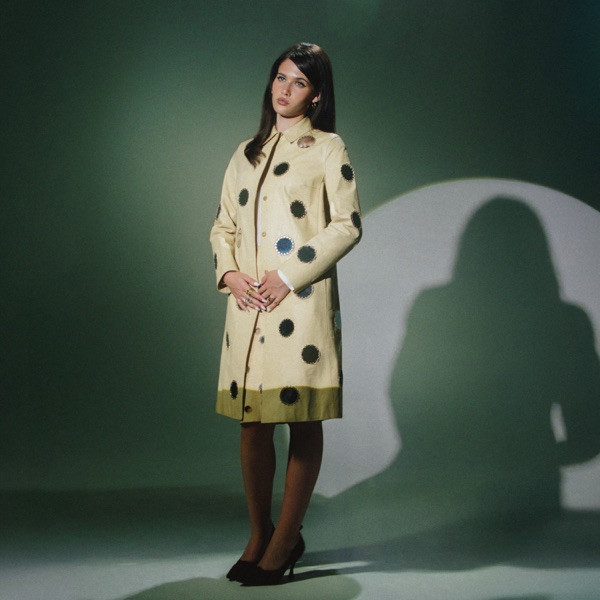
Billie Eilish is making her first major move into film with “The Bell Jar,” Sarah Polley’s new adaptation of Sylvia Plath’s classic novel. Early photos from the Toronto set show the singer transformed into Esther Greenwood, opening a new chapter for an artist whose music has already explored identity, pressure, fame and difficult inner emotions with unusual honesty.
Billie Eilish has been photographed on the set of “The Bell Jar” for the first time, and the images reveal much more than a simple costume change. With auburn hair, red lipstick, pearls and carefully styled 1950s clothing, the 24-year-old singer looks far removed from the visual identity that made her one of the most recognizable artists of her generation. She is stepping into the role of Esther Greenwood, the young writer at the center of Sylvia Plath’s classic novel, for what will become the first major leading role of her acting career.
The transformation immediately attracted attention, but the real interest goes beyond the hair, makeup and vintage fashion. “The Bell Jar” brings together one of modern pop’s most emotionally open artists and a character who has represented pressure, ambition, isolation and mental struggle for generations of readers. Eilish has spent much of her musical career exploring what happens when a person feels watched, judged or trapped inside an identity created by other people. Esther’s story moves through many of the same emotional spaces, even though it takes place in a very different time.
The novel follows Esther during what should be an exciting period of her life. She earns a prestigious magazine internship in New York and appears to be moving closer to the successful future she has imagined for herself. From the outside, everything seems full of promise. She is intelligent, ambitious and surrounded by opportunities that many young women of her time could only dream about. Yet that success does not make her feel free. Instead, the pressure surrounding her begins to close in.
Esther becomes increasingly unsure of who she is expected to become. The choices available to her seem less like possibilities and more like narrow roles she must accept. Her ambitions, relationships and changing mental health pull her further away from the life everyone assumes she should want. What begins like a traditional coming-of-age story slowly becomes a much darker portrait of emotional distance and a young woman losing her connection to the world around her.
Sylvia Plath wrote “The Bell Jar” with strong links to her own life, creating a character who feels painfully personal without becoming simple or easy to explain. Esther is not only sad or unwell. She is funny, observant, intelligent, difficult, ambitious and angry. She can see the limits of the world around her very clearly, but she cannot always see a way to escape them. Any screen version needs to protect that complexity rather than reduce her to a familiar image of the troubled young woman.
That is one reason Billie Eilish feels like such an interesting casting choice. Her music has repeatedly returned to the pressure of being seen and the uncomfortable gap between public expectation and private reality. From the beginning of her career, she used clothing, videos and visual changes to keep control over an image that could otherwise have been shaped entirely by the public. Her oversized outfits were never only a fashion trend. They also created distance between her body and the constant judgment that comes with global fame.
As her career developed, Eilish continued changing her appearance before audiences could lock her into one permanent version of herself. Hair colors, silhouettes and styling choices became part of an ongoing conversation about identity. She could move from loose streetwear to classic Hollywood glamour and then leave both images behind. That refusal to remain visually fixed has always felt connected to her larger work, which often questions how much of a person belongs to them once millions of people begin watching.
Esther Greenwood faces a similar struggle in a world with very different rules. She is surrounded by expectations about how a young woman should look, behave, work, love and build a future. Every possible path seems to require giving up another part of herself. Eilish’s own experience does not make her the same as Esther, but it may give her a useful emotional connection to a character who is constantly trying to understand herself while other people offer ready-made answers.
Sarah Polley’s involvement adds another reason to take the project seriously. The Oscar-winning filmmaker returns to directing after “Women Talking,” a film that examined women, power and trauma without turning pain into empty drama. Polley has shown a strong interest in complicated female experiences and in stories where the most important conflict may happen quietly rather than through obvious action.
With “The Bell Jar,” she faces the challenge of adapting a novel that lives deeply inside Esther’s mind. The book’s power comes from the way the reader experiences her thoughts, fears and changing sense of reality. Film cannot simply copy that inner voice. It has to find visual and emotional ways to make the audience understand what Esther feels without explaining every detail directly.
The first set photos suggest that the production is paying close attention to the period. In one sequence, Eilish wears a fitted red knitted top, a checked pleated skirt, red strap shoes and a matching handbag while walking beside women dressed in bright vintage outfits. Toronto has been transformed into 1950s New York, creating a polished world that looks full of color and opportunity.
That surface beauty matters because Esther’s inner experience moves in the opposite direction. The city can look stylish and exciting while she feels increasingly separated from it. The contrast between the attractive image of young adulthood and the emotional reality underneath is central to the novel. If the film captures that gap, the fashion and production design will become more than decoration.
Another photograph shows Eilish in a green dress, soaked by rain and wearing simple dark shoes. The image feels less controlled and more exposed. The carefully arranged style of the earlier look appears to be breaking down, suggesting the way Esther’s outer life begins to lose its shape as her mental health worsens. These early images cannot reveal the quality of the performance, but they do hint at a visual journey from order toward vulnerability.
Eilish is not completely new to acting. In 2023, she appeared in “Swarm” in a small but unsettling role that showed she could create tension without relying only on her music persona. Her performance was brief, but it proved that she understood how to use stillness, voice and discomfort on screen. “The Bell Jar,” however, will require something much larger.
Esther carries the entire story. The role cannot depend on one striking scene or a memorable entrance. Eilish will need to show the character’s emotional movement slowly, through small changes in expression, rhythm and behavior. Depression in “The Bell Jar” is not presented only through dramatic breakdowns. It appears through disconnection, confusion and the loss of meaning in ordinary things. That requires a controlled performance able to communicate what Esther cannot always say.
Carey Mulligan will play Mrs. Greenwood, Esther’s mother, bringing another experienced performer into one of the novel’s most complicated relationships. The bond between mother and daughter is not built around simple cruelty or a lack of love. There is care, but there is also distance and misunderstanding. Mrs. Greenwood belongs to a generation with limited language for mental illness and often responds with practical ideas when Esther needs emotional understanding.
That tension could become one of the film’s strongest elements. A mother may believe she is helping while making her daughter feel even more alone. Mulligan has often played characters who can express several emotions at once, making her a strong choice for a relationship where concern, pressure and disappointment may exist inside the same conversation.
Connor Storrie is also part of the cast in a role that has not yet been revealed, while Focus Features is handling production and distribution. Filming began in Toronto in late June and is expected to continue through the summer. No official release date has been announced.
For Billie Eilish, the move into acting comes after she has already built a strong relationship with cinema through music. She and Finneas have won two Academy Awards, first for “No Time to Die” and later for “What Was I Made For?” from “Barbie.” In both cases, the songs worked as more than material placed over the final credits. They became emotional voices within the films themselves.
“What Was I Made For?” is especially connected to the themes surrounding “The Bell Jar.” The song asks what happens when a person realizes the role designed for them may no longer fit. It explores identity, purpose and the emptiness that can appear when someone feels disconnected from the version of life they were expected to want. Moving from that song into Esther Greenwood’s story feels less like a sudden career change and more like another way of exploring familiar emotional questions.
There is still a risk that Eilish’s fame could distract from the character. When a globally recognized musician takes on a famous literary role, audiences may initially see the celebrity transformation rather than the fictional person. The early attention has naturally focused on her hair, lipstick and period clothing. The real challenge will begin when the visual surprise fades.
Esther cannot remain simply “Billie Eilish in a vintage costume.” The performance will need to become strong enough for viewers to forget the Grammys, concerts and pop-star image surrounding the actress. That is a difficult demand, especially in a story where so much depends on emotional detail rather than large physical action.
Working with Polley may give Eilish the space to make that transition carefully. Acting could also offer her something music rarely allows: distance from her own biography. When she releases a personal song, listeners immediately search for clues about her private life. Every lyric can become evidence in a story about who she is dating, how she feels or what experience inspired the track.
Through Esther, Eilish can bring her own sensitivity to someone else’s story without every emotion being treated as a confession. She can explore pressure, identity and pain while remaining inside a character. For an artist who became famous at a very young age and has spent years having her work connected directly to her private life, that separation may feel creatively freeing.
“The Bell Jar” remains in production, and set photographs cannot show whether Billie Eilish will carry the full psychological weight of Esther Greenwood or how Sarah Polley will translate such an internal novel to the screen. What they do show is a project that appears to be treating the material as more than a simple celebrity casting opportunity.
Toronto has become 1950s New York, the visual transformation has begun and Billie Eilish is stepping into a role that will be judged by much more than how different she looks. Her first major film performance will depend on whether she can reveal the invisible pressure under Esther’s carefully arranged appearance and make the audience feel the world slowly closing around her.